

GLUES
LIQUIDS
LASH LIFT
BROWS
OTHER PRODUCTS
OUTLET
The History of Eyelash Extensions
by Laura Brown March 15, 2022 2 min read


Table of Contents
Exploring the History of Lash Extensions
Classic Eyelash Extensions seem like a timeless trend that will never go out of style, but when did eyelash extensions start to gain popularity? Who invented classic lash extensions and what other innovations paved the way to the treatment we know and love today? Let's delve into this interesting topic.

3500 BC – Ancient Egyptians used oils and often malachite to thicken and lengthen their lashes and brows. This was less of a beauty statement and had more to do with keeping the harsh sun out of their eyes.
753 BC – Roman philosophers suggested that long lashes were a sign of morality and virginity, and short lashes a sign of ageing. Due to this, people turned to enhancing their lashes to appear more moral and youthful.
Mid-1800s – During the Middle Ages, women took to plucking out their lashes and brow hairs to show off their foreheads. Later, Queen Victoria’s perfumer, Eugène Rimmel, developed an early mascara to accentuate the eyes.

Portrait of a Lady by Rogier van der Weyden (c.1399–1464)
1899 – Parisian women began sewing (yes, SEWING) hairs into their eyelids to obtain those longer, more fluttery lashes.
1911 – Canadian inventor Anna Taylor obtained a patent for false lashes—today’s strip lashes—which took off well. Not long after, German hairdresser and inventor Karl Nesser began using similar strip lashes in his salon to shield the eyes from the harsh overhead lighting.
1916 – The silent film industry took off, seeing actresses using their eyes to convey emotions that they could not put across in words. Even then, these lashes were more like what we know as strip lashes today, with wig hair being sewn into gauze and glued onto the eyelids. There was some puffing and sensitivity, of course, but they took viewers by storm nonetheless, and soon everyone wanted longer, thicker lashes! Shortly after this, the Roaring 1920s arrived, with skirts getting shorter and lashes getting longer and flirtier!

Bebe Daniels’ eyelashes in 1920s silent cinema
The early 2000s – Here we saw a rise in what we know today as cluster lashes. They weren’t quite the classic eyelash extensions we know right now, but the lashes—made from synthetic fibres or sometimes animal fur—were applied to the lashes instead of the eyelids. The trend came to the West from South Korea, where methods of lash enhancement had been developing for a few years by then.
The 2010s – A time when the eyelash extensions industry truly began to boom. The extensions themselves became finer, allowing technicians to create fuller-looking sets while tailoring the weight to the natural lashes. Techniques also improved, with greater emphasis on careful isolation, suitable styling and client comfort. Trends moved towards vegan alternatives, using synthetic PBT fibres instead of animal fur.
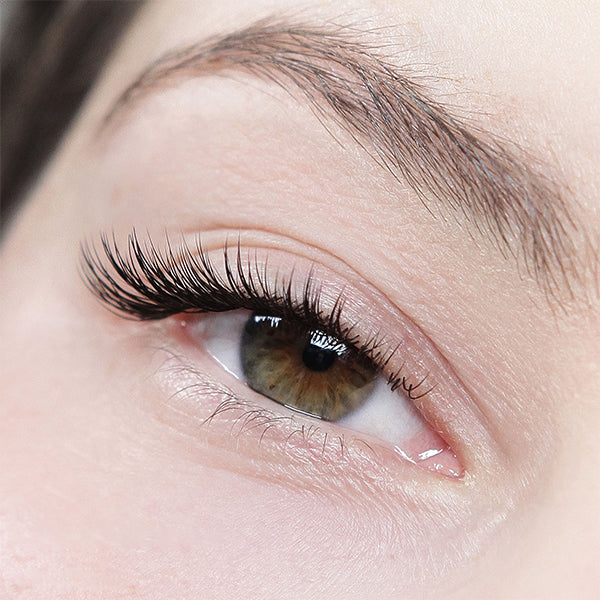
With suitable products, professional training and careful application, we’re in a position where we can be creative! New styles, lash maps and even colourful lashes are taking the industry by storm, with lash techs and clients alike eager to try new and daring looks!

Carbon-neutral shipping on all orders
51990kg
shipping emissions removed
That's like...
133093
miles driven by an average gasoline-powered car